
Low Doc Home Loans for Self-Employed Borrowers — Tax Returns Not Required
Self-employed, contractor, or sole trader? Your income is real — but standard lenders don't always see it that way. RyRo Loan Centre specialises in low doc home loans that accept BAS statements, bank statements, and accountant's letters instead of two years of tax returns. Based in Norwest, Sydney — helping self-employed Australians borrow with confidence.
Start Here
Book Your Free Low Doc Assessment
Tell us your situation and we'll identify which lenders can fund you — with the documentation you actually have.


“Just tell us what you're buying, we'll match you to the right lender. No pressure, no obligation.”
Sumit · Director & Senior Loan Specialist
By submitting, you agree to our privacy policy and terms of service.
Why Self-Employed Australians Need a Low Doc Specialist
More than 2.1 million Australians are self-employed, yet the standard home loan application process is built entirely around PAYG income — two years of tax returns, group certificates, and payslips. For a sole trader who legitimately minimises taxable income, or a contractor whose ABN income is paid in varying amounts across the financial year, the standard process produces a borrowing capacity that doesn't reflect reality.
Low doc loans bridge that gap. The right low doc lender — matched to your specific documentation — can fund the same purchase a standard lender would decline without a second look. The key is knowing which lender accepts which documents, at which LVR, and for which income profile. That is exactly what we do. Use our borrowing power calculator for an indicative figure, or speak with us for a full assessment.
What Is a Low Doc Home Loan?
A low doc home loan is a mortgage for borrowers who cannot provide the standard income documentation — typically two years of personal and business tax returns — required by most lenders. Instead, low doc lenders accept alternative evidence of income: BAS statements, business bank statements, an accountant's declaration, or a signed income declaration.
Low doc loans are not a niche product for unusual circumstances. They are a mainstream solution for the millions of Australians who are self-employed, run a business, or earn income in a way that doesn't neatly fit a PAYG assessment. The trade-off is a slightly higher interest rate and, in most cases, a maximum LVR of 60–80% — meaning a larger deposit or more equity is required.
Standard Documentation Accepted
- 2 years personal tax returns
- 2 years business tax returns
- ATO notices of assessment
- Financial statements (P&L, balance sheet)
Low Doc Alternatives Accepted
- BAS statements (2–4 quarters)
- Business bank statements (3–12 months)
- Accountant's declaration or letter
- Signed income declaration form
Who Qualifies for a Low Doc Loan?
Low doc loans are primarily designed for the following borrower types:
Self-employed sole traders and business owners
Australians who run their own business and declare income through personal or business tax returns. If your taxable income is significantly lower than your actual business revenue due to legitimate deductions, a low doc lender assessing BAS turnover will typically give you a higher borrowing capacity.
Contractors and freelancers with ABN income
Contractors paid on ABN invoices — trades, IT, consulting, creative — often have consistent, high income that a PAYG servicability model undervalues. Low doc lenders assess your bank statement deposits or BAS figures and lend accordingly.
Borrowers with recently filed tax returns
If you have recently changed from PAYG to self-employment, or if your most recent tax return is a poor reflection of your current income, low doc allows you to use BAS or bank evidence to demonstrate what you actually earn now.
Business owners buying investment property
Business owners expanding a property portfolio often prefer low doc because rental income combined with BAS-verified business income gives a more accurate picture than tax returns that include non-cash deductions.
What Income Evidence Do Low Doc Lenders Accept?
The key distinction for low doc lenders is not how much you earn — it's how you can prove it. Different lenders accept different combinations of evidence. Understanding what you have available is the first step to matching you to the right lender.
- 1
BAS Statements
Business Activity Statements lodged with the ATO show your GST turnover — the total revenue your business generated in each quarter. Most low doc lenders require 2–4 recent quarters of BAS. The income figure used for borrowing capacity is calculated from this BAS turnover, with lenders typically applying a shading factor of 60–80% to derive a net income estimate.
- 2
Business Bank Statements
Three to twelve months of business bank statements showing regular income deposits. This is the most flexible evidence type because it reflects actual cash flow rather than declared tax figures. Lenders assess average monthly deposits and extrapolate an annual income. Irregular or seasonal income can be accommodated with a longer statement period.
- 3
Accountant's Declaration
A letter from your registered accountant declaring your income for the most recent financial year or current year-to-date. The accountant must be registered and the declaration must meet the lender's template requirements. This option is useful when BAS or bank statements are available but don't fully represent income (e.g., income paid into a trust).
- 4
Signed Income Declaration
Some lenders still offer a signed declaration option where the borrower self-declares their income on a lender-provided form. This carries the highest rate premium and strictest LVR limits (usually 60–65% maximum) but is an option for borrowers who genuinely have no other documentation available.
BAS Statements vs Tax Returns: Which Gives You More Borrowing Power?
For many self-employed borrowers, BAS-based low doc assessment produces a significantly higher borrowing capacity than a full doc assessment based on tax returns. This is because tax returns reflect taxable income — after legitimate deductions, depreciation, and business write-offs. BAS statements reflect GST turnover, which is a closer proxy to the cash flowing through the business.
Example: a plumber running a sole trader business with $280,000 annual revenue might have a taxable income of $95,000 after vehicle, equipment, and home office deductions. A full doc lender would assess borrowing capacity on $95,000. A BAS-based low doc lender would assess on a shaded version of $280,000 — potentially 2–3× the borrowing capacity for the same borrower.
The trade-off is a small rate premium and a lower maximum LVR. For many borrowers, the trade-off is worth it. Use our borrowing power calculator to compare estimates, or book a free strategy call with our low doc specialists.
Not Sure Which Low Doc Option Fits Your Situation?
Tell us your income structure — we'll match you to lenders who can actually fund you, at the best available rate.
“Just tell us what you're buying, we'll match you to the right lender. No pressure, no obligation.”
Sumit · Director & Senior Loan Specialist
By submitting, you agree to our privacy policy and terms of service.
Why Self-Employed Borrowers Choose RyRo
We know which lenders work for your documentation
Low doc lending policy varies dramatically across lenders. One will accept 2 quarters of BAS; another requires 4. One shades BAS turnover at 60%; another at 75%. We know each lender's exact policy and match you to the options that will produce the best result for your specific documentation.
We help you maximise borrowing capacity
We review all the documentation available to you — BAS, bank statements, accountant letters — and identify which combination produces the strongest income figure with the most lenders. We don't just take what you give us; we work with you to present your income correctly.
We prepare complete, lender-ready applications
Incomplete low doc applications are a leading cause of declined or delayed approvals. We package everything the lender needs — income evidence, ABN registration, GST history — before submission, so credit decisions come back faster and with fewer conditions.
$0 broker fees
Our service is completely free to you. We are paid by the lender at settlement. No application fees, no assessment charges, no hidden costs.
Low Doc Loan FAQs
What is a low doc home loan in Australia?
Who qualifies for a low doc home loan?
What income evidence do low doc lenders accept instead of tax returns?
How much can I borrow on a low doc home loan?
What is the difference between a low doc loan and a full doc loan?
Are low doc loan interest rates higher than standard home loans?
Can a self-employed borrower with one year of BAS get a low doc loan?
Can I get a low doc loan for an investment property?

Ready to Find Your Low Doc Home Loan?
Join 2,000+ Australians who've trusted RyRo Loan Centre. Low doc specialist advice. $0 broker fees.

“Most low doc declines happen because the borrower was matched to the wrong lender. We find the right fit before we submit a single application.”
Sumit · Director & Senior Loan Specialist
Meet the team

Rohan
Asset Finance
Helping clients secure the right equipment and vehicle finance.
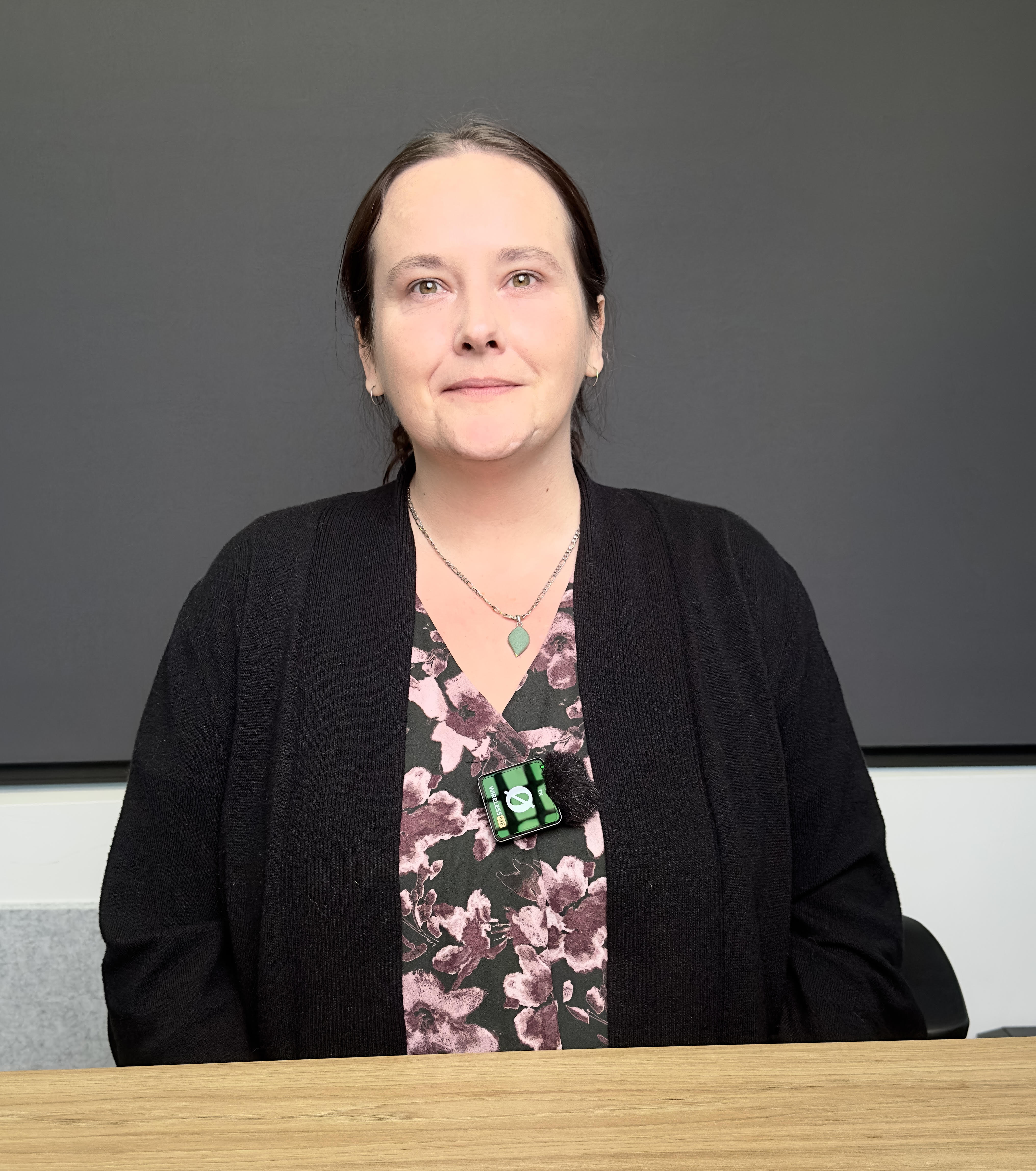
Kathryn
Settlement Liaison
Keeping your settlement on track from application to keys.
Free strategy call - no obligation
Tell us your income structure and documentation — we'll come back to you with lender options that actually work.
By submitting, you agree to our privacy policy and terms of service.
What Our Customers Say
Based on 340+ verified Google Reviews.
Vandhana Naidu

"We can't thank Sumit enough for helping us secure our first home - especially in such a tough and competitive market. He truly went above an…"
Read moreEmi Lia
"We had a great experience with Sumit and his team. We can't express enough how grateful we are to them, as they did a really splendid job! H…"
Read moreRajnil Sharma
"Working with Sumit Joshi & co was a fantastic experience. They were very professional, knowledgeable, and made the whole process stress-free…"
Read moreSS
"I had an absolutely outstanding experience with RyRo Loan Centre and I cannot thank Sumit enough for his incredible support throughout my in…"
Read moreGarima Sharma
"Sumit made the entire property purchasing process smooth and stress-free. Always professional, responsive, and genuinely helpful, he went ab…"
Read moreInfo Nue Design Homes
"Our experience with Sumit and his team was wonderful. They guided us from start to finish in a professional and unbiased manner. They are a…"
Read moreGopichand Paladugu
"It's been an amazing experience working with Sumit, he helped me through initial Mortgage loan and recently in refinancing my loan. He helpe…"
Read moreNaga Seramsetty
"As recent migrants from New Zealand, my wife and I were navigating the complex Australian property market for the first time, and we couldn'…"
Read moreAndrew Napier
"I had an amazing experience working with Sumit to secure a loan for my first home. From start to finish, he made the process smooth, stress-…"
Read moreKamal Raqba
"Sumit Joshi is our trusted mortgage broker, we have used his services for the last 8 years and he has always guided us in the right directio…"
Read moreAdam Moffat
"As first-time homebuyers, we were initially unsure about which mortgage broker to choose, and we had a few lined up to discuss our needs. Su…"
Read moreYash Dharva
"I had an outstanding experience working with Vijay Dhingra from RyRo loan centre from start to finish. They made the entire mortgage process…"
Read morePraneet Singh
"Sumit and his team were super helpful throughout the entire loan approval process. Always prompt with responses and super convenient to deal…"
Read moreSudhir Sehgal
"First of all heartiest thanks Sumit for making our journey to get loan approval so smooth and in really very comfort zone, since I am in Aus…"
Read moreChloe Martirena
"I had an amazing experience working with Sumit while buying my first home! From the very beginning, he was incredibly responsive and always…"
Read moreSuvidha Horn
"Thank you so much Sumit, Dean, Kathryn and the team at RyRo. You guys have been excellent and thorough professionals. Highly recommended for…"
Read moreAlex
"Sumit and team gave as an amazing experience, even after we decided to back out of our first purchase , I reached out to Sumit a year or two…"
Read moreJay Patel
"I had an exceptional experience with RyRo Loan Centre, and I wholeheartedly recommend their services. Sumit and his team were not only highl…"
Read moreManjit Kaur
"I had an amazing experience with Sumit! The whole process was smooth, professional, and stress-free. He was incredibly helpful every step of…"
Read moreTyler Howard
"I can't recommend Sumit enough! As a first-time home buyer, I was nervous about the whole process, but he made everything so easy and straig…"
Read more